The Connection Breath: An Important Part of Prenatal Yoga and Postnatal Recovery
Empower Her Fitness | JUL 22, 2022
breath work
prenatal
postnatal
The Connection Breath: An Important Part of Prenatal Yoga and Postnatal Recovery
Empower Her Fitness | JUL 22, 2022
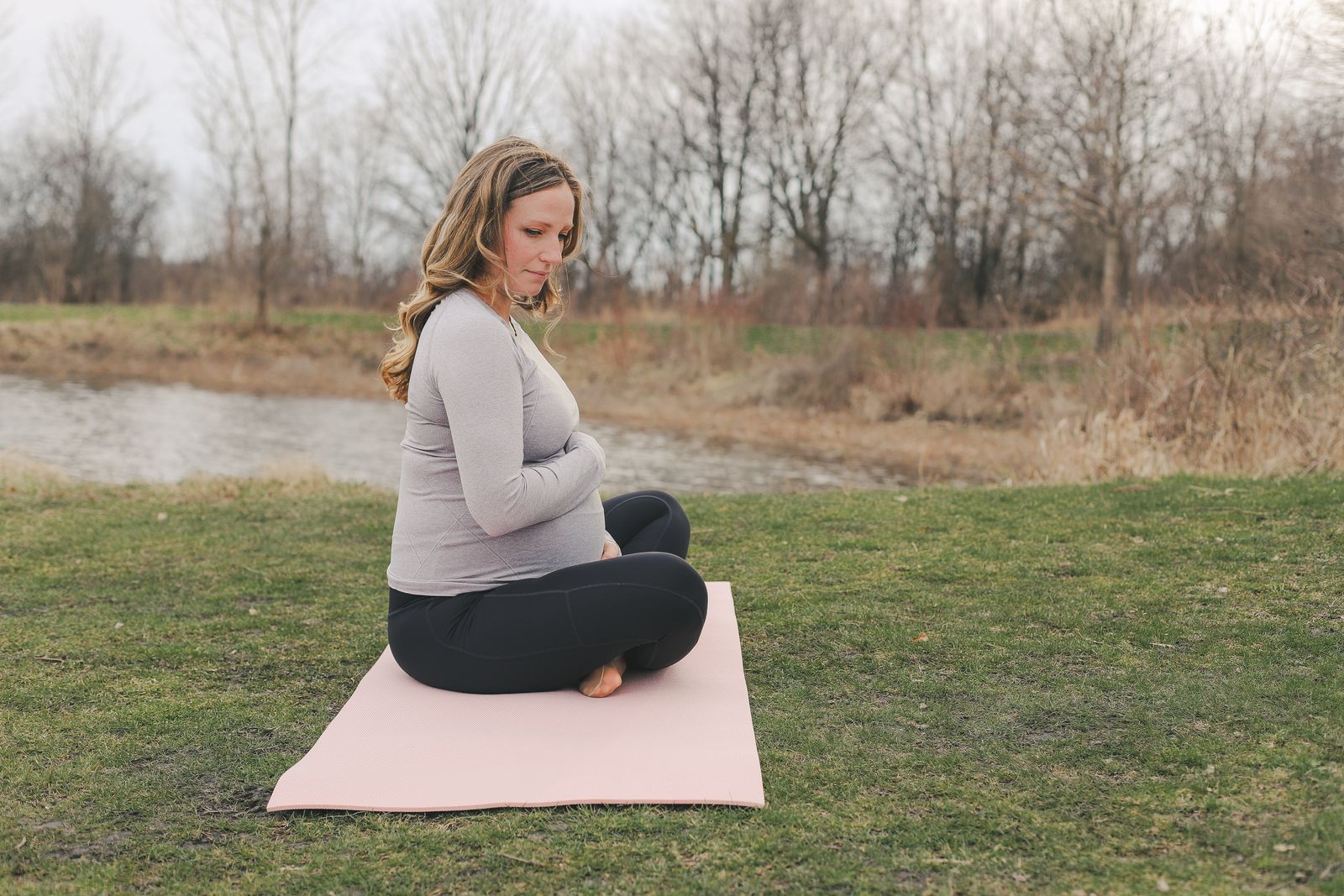
Breathing is a very mindless activity at times, but there is a lot of power in our breath when we are intentional about it.
One of the first things we do in yoga class is turn our attention to the breath, placing one hand on our chest and one on our belly, feeling as they rise and fall. Breathing deeply has many benefits (none of which we’ll get into today), but have you ever thought about what happens physically when you take a deep breath?
![[1]](https://storage.googleapis.com/bitnami-cs96dkm0ag.appspot.com/offeringtree-client/1658532526961/canister.jpg)
As you can see above, breathing incorporates the diaphragm, multifidus, transverse abdominis and muscles of the pelvic floor. When you breathe in, the diaphragm moves downward, pushing the air into the three other main areas, which you can see by the expansion of your rib cage and abdomen. Some women, however, keep their stomachs flexed, almost as if sucking in, during inhalation. If the abdomen doesn’t move during inhalation, though, where do you think that pressure goes? If you said, “down through the pelvic floor,” you’d be correct! This is not something that you want in general, but especially not when you are pregnant.
Why is that? Well, if the intra-abdominal pressure is not broadly distributed, that pressure could lead to a weakened pelvic floor resulting in incontinence, low-back or pelvic pain, pelvic organ prolapse, or hernia.
So, in addition to allowing the breath to expand our rib cage and abdominals and relax our pelvic floor, we also want to work to strengthen our pelvic floor. Cue the kegel.
Kegels are an exercise that you hear about all the time as a woman, especially when pregnant. But if you are like me, you’ve learned how to perform a kegel unrelated to the breath. Now knowing that the muscles of the pelvic floor are connected to our breath, though, we need to bring the two together. Working to both relax and contract the pelvic floor in conjunction with our breath. Cue the Connection Breath.
To perform the Connection Breath you want to first start with optimal alignment - stacking the rib cage over the pelvis so the diaphragm and pelvic floor muscles are aligned and set up for optimal coordination. Then:
*If you are unsure about how to contract the pelvic floor, imagine you really have to use the bathroom but you are waiting in a really long line (an ever-too-common scenario), then squeeze and lift your pelvic floor muscles as if you were trying to “hold it in.”
I teach the Connection Breath in prenatal yoga and encourage coming back to it right after birth (regardless of delivery type) as you will want to incorporate it into daily tasks, like picking up your baby, as well as when you return to exercise.
For a step-by-step walkthrough of how to perform the Connection Breath, check out this YouTube video by Girls Gone Strong.
Image Reference
[1] Why is your core so important? BodyTech Physiotherapy. [Accessed on 2022 July 22]. Available from: https://bodytechphysio.wordpress.com/tag/piston-breathing/.
Empower Her Fitness | JUL 22, 2022
Share this blog post